Read Along With Scott: Where to Hide a Star

Tags

, , , , , ,

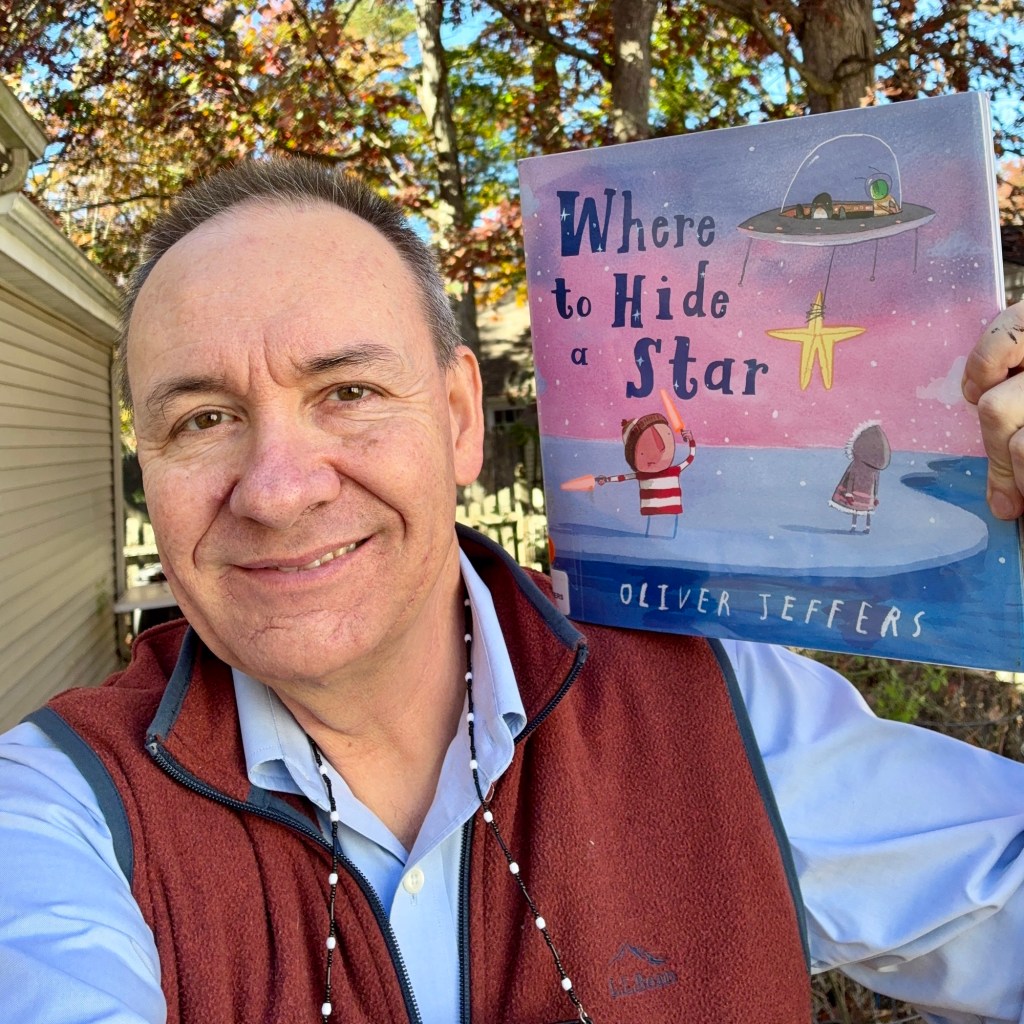
Today’s reading brings back some old friends. In Oliver Jeffers’s Where to Hide a Star, the boy plays hide-and-seek with his friends the star and the penguin, until one day the star cannot be found. The boy calls on the Martian, and together they fly to the North Pole on a rescue mission. What he finds there teaches him something new about friendship: the things we love most are sometimes meant to be shared.

The book was published in October 2024, twenty years after Jeffers’s first picture book, How to Catch a Star (2004). It reunites characters from his earlier stories: the star from How to Catch a Star, the penguin from Lost and Found, and the Martian from The Way Back Home. At 48 pages, it is longer than most picture books, which gives the story room to breathe. Jeffers has said that How to Catch a Star began with a memory of looking up at the stars from a jetty in Sydney. He was born in Australia, grew up in Northern Ireland, and now lives in Brooklyn, New York.

Watch how Jeffers draws his boy: a round head, two dots for eyes, a single line for a nose, a striped shirt, and two thin blue legs. With almost nothing, he shows worry, hope, and relief. Notice too how lonely the empty white pages feel when the star is missing.

I shaped this episode around a “Sharing” arc: playing together, losing a friend, searching hard, and discovering that friendship can grow bigger than two.

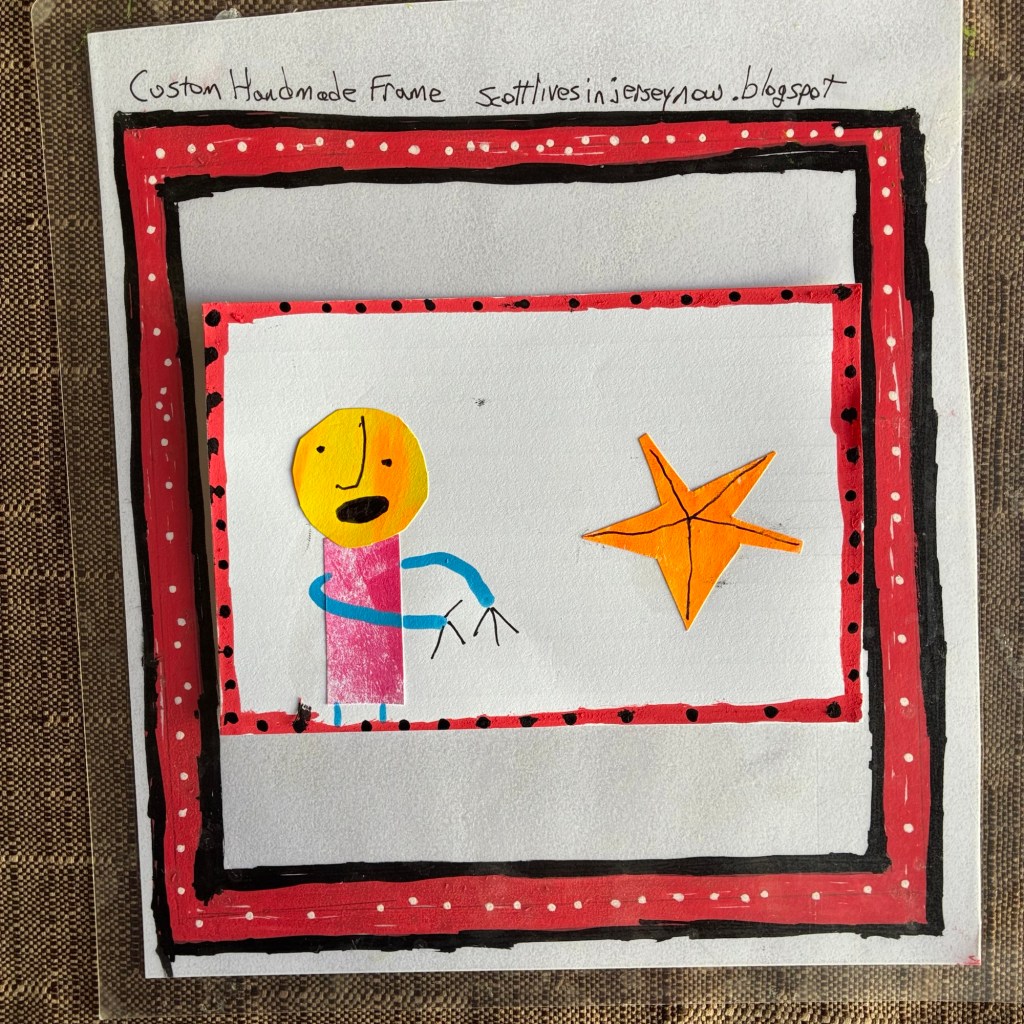
Before recording, I made my index card as a tribute to the boy and his star. The boy’s round head is cut from my yellow-and-orange gelli-printed paper, his body is mottled pink, and he stands on two small blue legs, a nod to Jeffers’s own drawings. One long blue arm curls around him and reaches toward an orange star. They stand inside a red border with black dots, in my handmade red-and-black frame.
Watch the full episode, and then read it again together. Ask your child: who else might want a star for a friend?
Read Along With Scott: Lost and Found

Tags

, , , , , ,

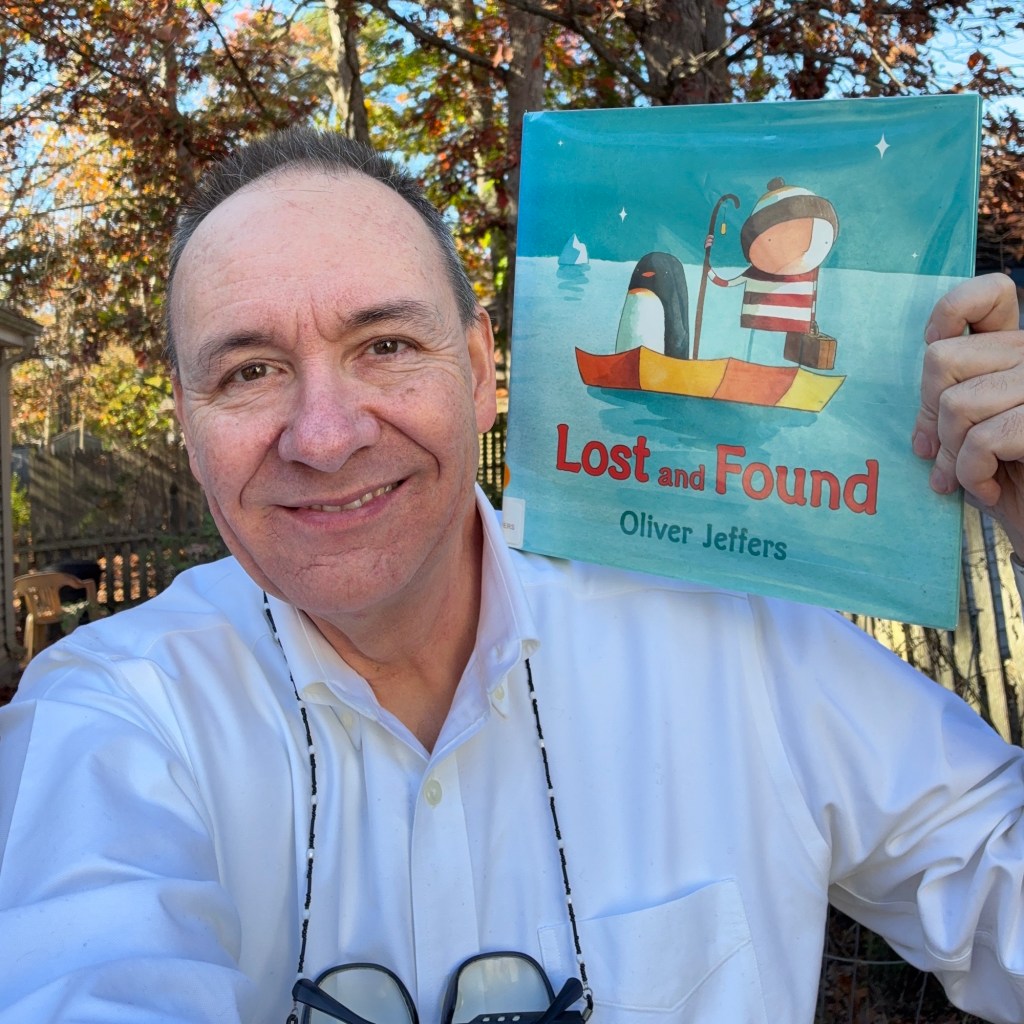
Today’s reading is a quiet classic about friendship. In Oliver Jeffers’s Lost and Found, a boy opens his door to find a penguin. The penguin looks sad, and the boy is sure it must be lost, so he does what any kind child would do: he tries to take it home. Along the way, he learns that helping someone means understanding what they actually need.

The book was published in 2005, won the Nestlé Smarties Book Prize Gold Award, and was the Blue Peter Book of the Year. It was also shortlisted for the Kate Greenaway Medal. It was Jeffers’s second picture book; in his first three books, readers follow an unnamed boy, a sort of everyboy, as he returns a penguin to the South Pole or tries to catch a star. Jeffers was born in Australia, grew up in Northern Ireland, and now lives in Brooklyn, New York.

The story also became a much-loved film. Studio AKA’s Philip Hunt adapted and directed a 24-minute animated version in 2008, with music by Max Richter, and Jim Broadbent narrates it. It won the BAFTA for children’s animation at the 2009 British Academy Children’s Awards.

Watch how Jeffers uses space. The boy and the penguin are often tiny figures on big, open pages, which makes the sea feel enormous and their friendship feel precious. Notice, too, how simply he draws faces, and how much feeling still comes through.

I shaped this episode around a “Listening” arc: noticing that someone is sad, trying hard to help, and discovering that the best help begins with understanding.

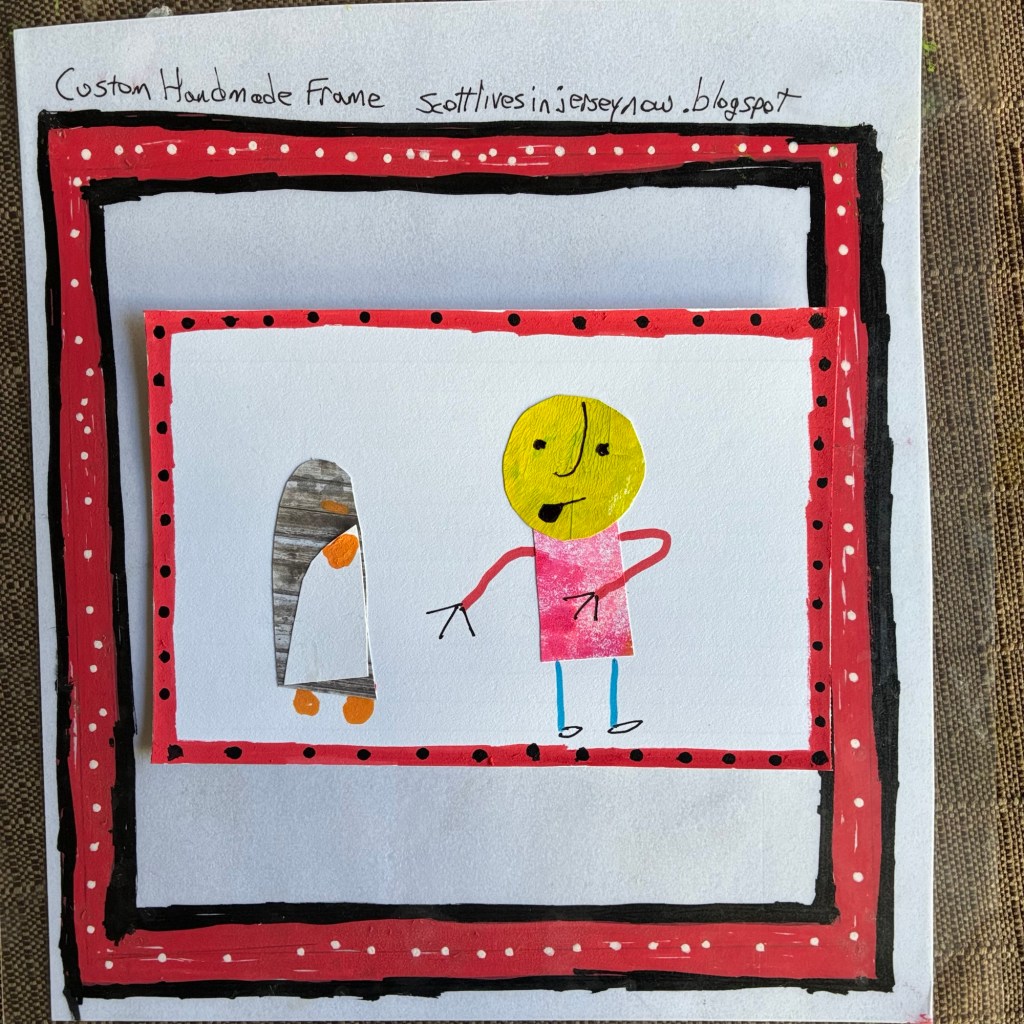
Before recording, I made my index card as a tribute to the boy and his penguin. I cut the penguin from gray, wood-grain-textured paper, with a white belly and orange feet. The boy has a round yellow head from my gelli-printed paper and a mottled pink body, and he reaches one long arm toward his new friend. They stand inside a red border with black dots, in my handmade red-and-black frame.

Watch the full episode, and then read it again together. Ask your child: was the penguin really lost?

Around the World Book Club: Portugal

Tags

, , ,

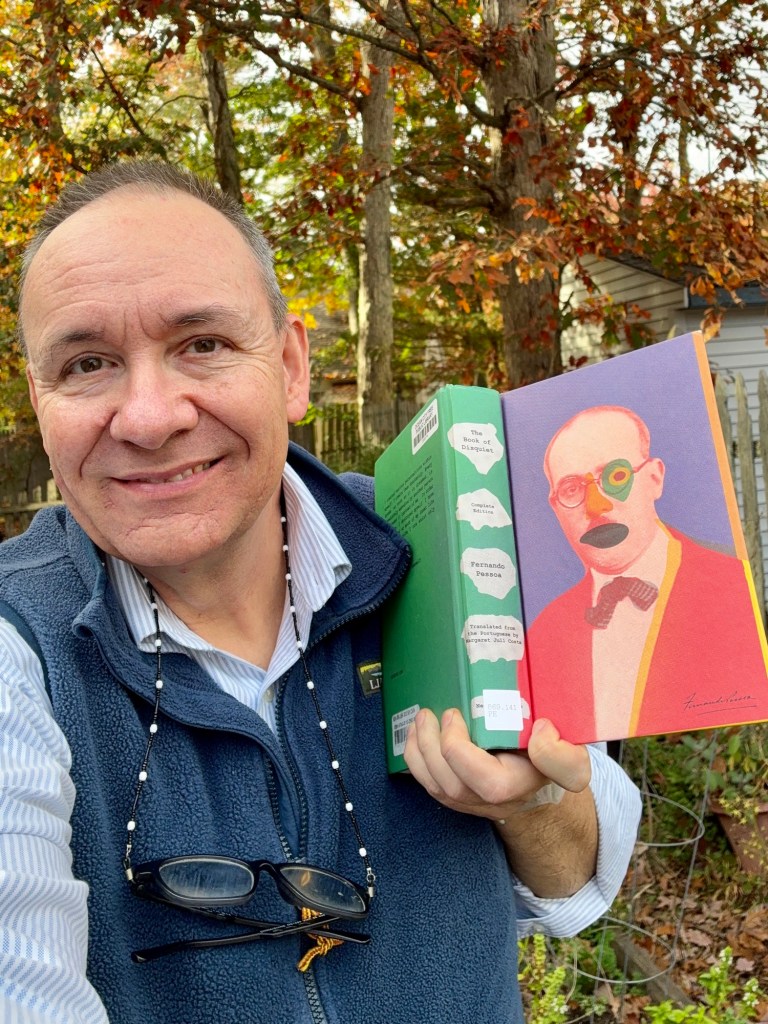
Last night I went to the Around the World Book Club at my local public library, and our destination was Portugal. 🇵🇹

My writer was Fernando Pessoa. His name is a small joke of fate: in Portuguese, pessoa means “person.” Yet he spent his life being not one person, but many.

He grew up in South Africa reading Shakespeare and Milton, then returned to Lisbon at seventeen and almost never left. He wrote business letters for trading companies and sat in the same cafés. In his lifetime, almost no one thought of him as a great writer.

After he died in 1935, his family found a trunk holding more than 25,000 pieces of paper, including work by invented poets he called “heteronyms,” each with a biography, a style, and opinions about the others.

The Book of Disquiet belongs to one of them, Bernardo Soares, a lonely assistant bookkeeper in Lisbon who watches the rain, his boss, and above all his own mind. The book is unfinished, hundreds of fragments with no plot. My advice: open it anywhere, read a page or two, and close it, as you would a diary.

One line stays with me: “Perfection never reveals itself. The saint weeps, and is human.”

Pessoa’s last written words were in English: “I know not what tomorrow will bring.” He could never have guessed that a trunk would make him one of the great writers of the twentieth century.

Read Along With Scott: A Ball for Daisy

Tags

, , , , , , ,

Today’s reading is a book with no words at all. A Ball for Daisy by Chris Raschka tells its whole story through pictures: a little dog, her beloved red ball, a trip to the park, and a moment of loss that every child, and every grown-up, will recognize. In 2012 it won the Caldecott Medal, the American Library Association’s award for the most distinguished American picture book for children, and it was Raschka’s second Caldecott Medal, after The Hello, Goodbye Window in 2006.

The story began in Raschka’s own home. He has explained that it came from a real experience: his son Ingo had a beloved ball that was destroyed by a dog. Ingo was four at the time, and Raschka remembers how devastating it was for him. I love that a father watched his son grieve over a ball and understood that the grief was real, and then made something beautiful from it.

Watch for the colors as you read. Raschka painted Daisy and the girl with Chinese ground ink, which can look soft and sometimes brownish or bluish, and saved heavy opaque paint for the red of the ball and for Daisy’s eyes, mouth, and collar. Some teachers have noticed that the background colors shift to match Daisy’s mood.

I shaped this episode around a “Comfort” arc: the joy of loving something, the sorrow of losing it, and the kindness that helps us heal. Because the book has no words, I narrate what I see, and I hope you will pause and let your child tell the story too.

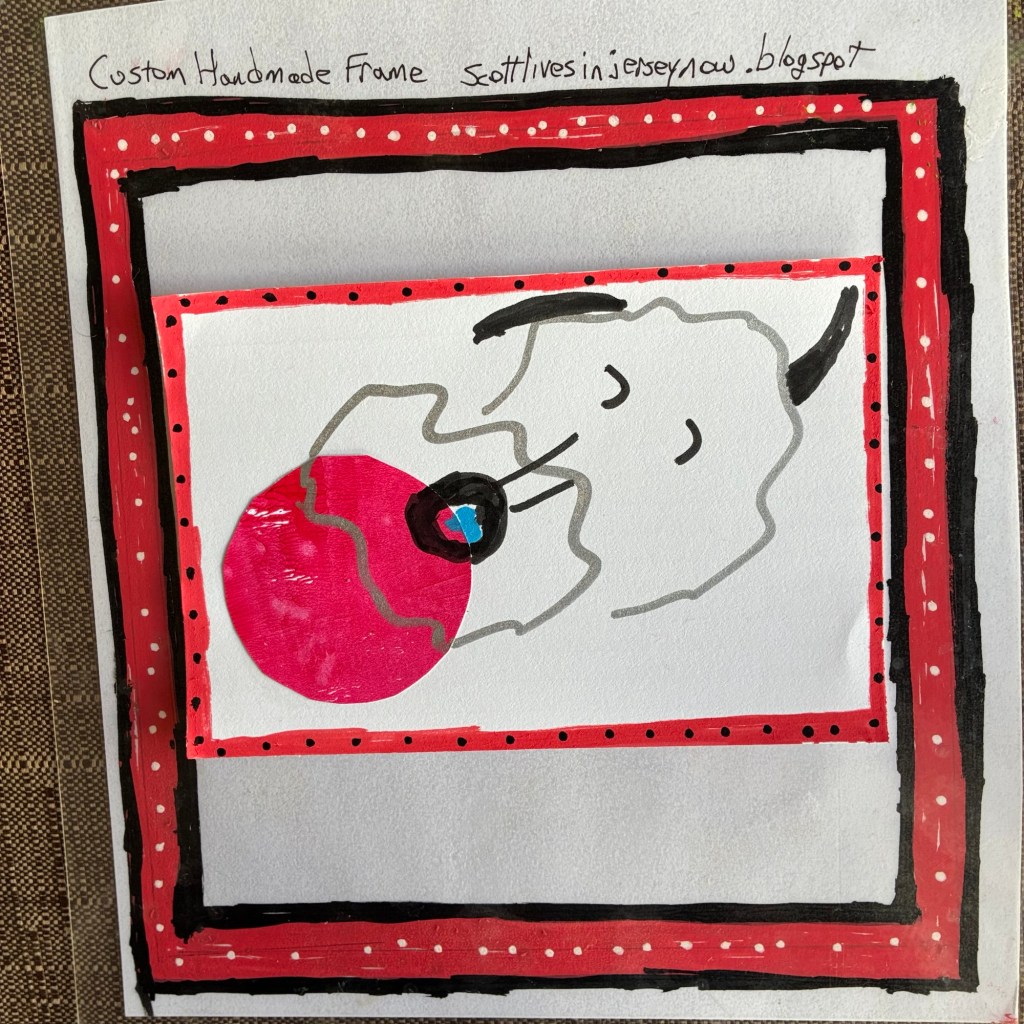
Before recording, I made my index card as a tribute to Daisy and her ball. I cut the ball from my own gelli-printed red paper, and drew Daisy in silver-gray lines, with black ears and a black patch around one blue eye. Her outline curls right across the ball, as if she will never let it go. She sits inside a red border with black dots, in my handmade red-and-black frame.

Watch the full episode, and then read it again together. Ask your child: what is Daisy feeling now?

Read Along With Scott: Simple Machines Made Simple

Tags

, , , , ,

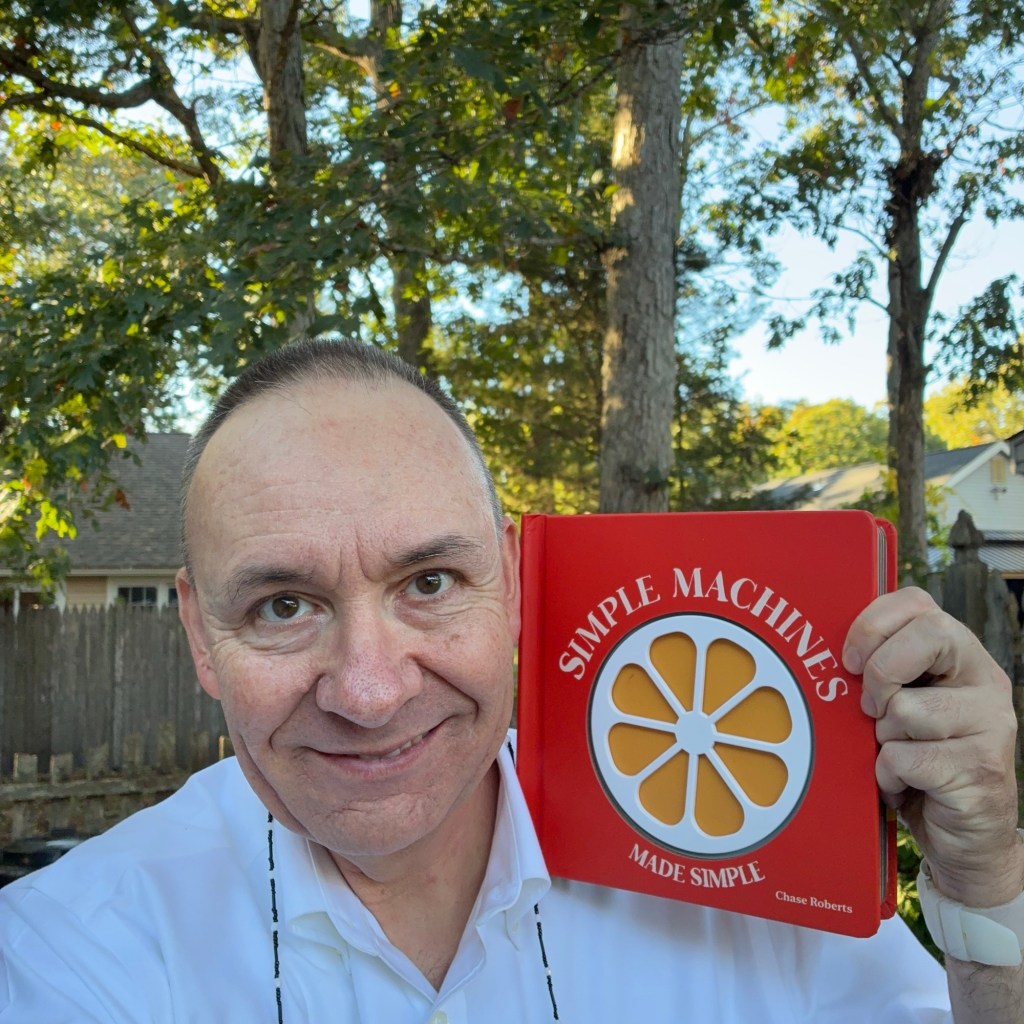
Today’s reading is a book you can hold in your hands and also work with your hands. Simple Machines Made Simple by Chase Roberts is a board book for very young readers, but it is not a typical picture book. Each page holds a working model: a wheel to spin, a knob to slide up an inclined plane, a wedge to push into a block until it splits, a lever to try. Alongside each one, Roberts points to the same machine in daily life, in scooters and roller skates, pizza slicers and escalators, shovels, knives, and axes.

Chase Roberts is a computer engineer, and his earlier books, Computer Engineering for Babies and its sequel, used buttons and lights to teach logic gates to toddlers. The idea for this one came, he says, when he caught one of his children catapulting cereal off a spoon at breakfast. I love that. Every engineer, it seems, begins as a child at a kitchen table discovering that a spoon can be a lever.

I shaped this episode around an “Ease” arc: the hard task, the clever trick, and the small wonder of work made lighter. People figured out these tricks thousands of years ago, and we still use them every day without noticing. This book gives them names and invites us to notice.

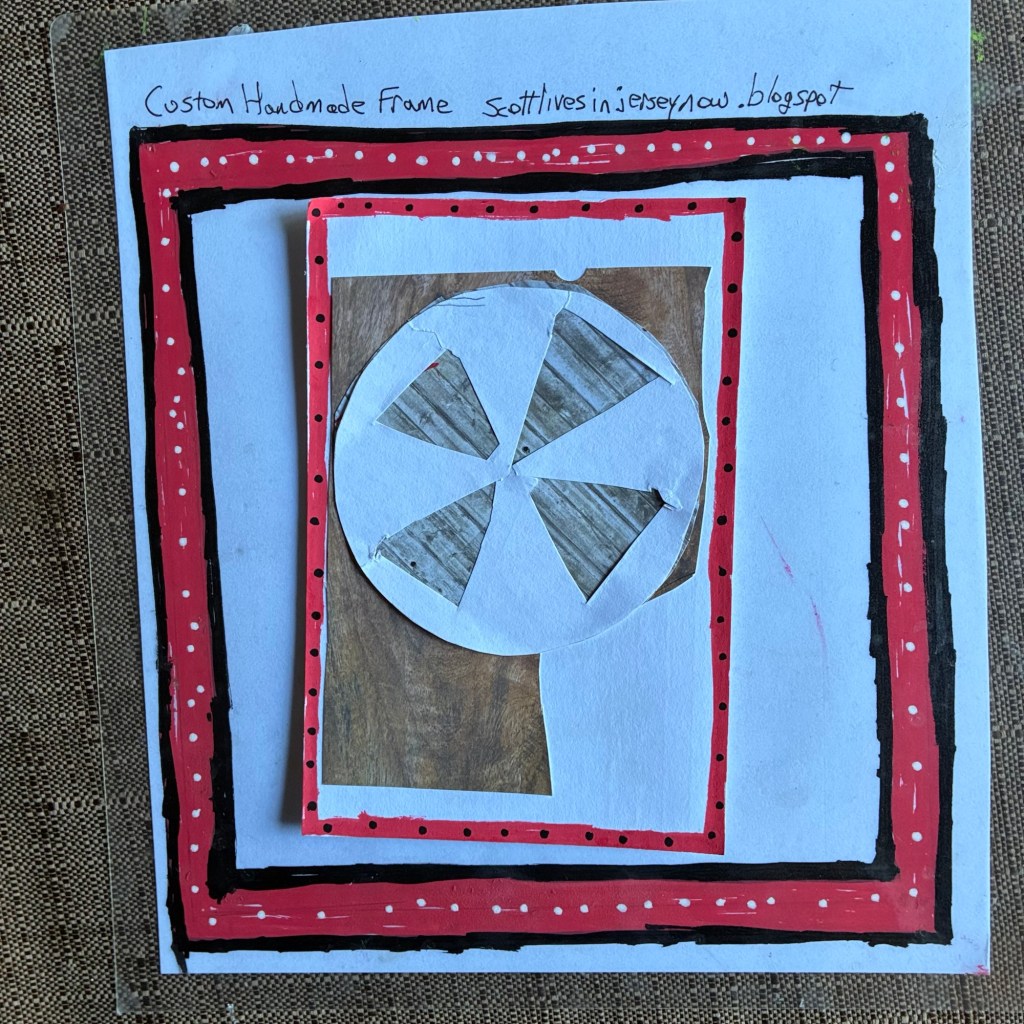
Before recording, I made my index card as a tribute to the wheel on the cover. I cut a white paper wheel and opened four triangular windows in it, so a weathered gray wood-grain paper shows through like spokes. The wheel sits on a block of brown wood-grain paper, mounted and ready to turn. It stands inside a red border with black dots, in my handmade red-and-black frame.

Watch the full episode, and then go on a simple-machine hunt in your own home. You may be surprised how many you find.

Read Along With Scott: The Incredible Book Eating Boy

Tags

, , , , ,

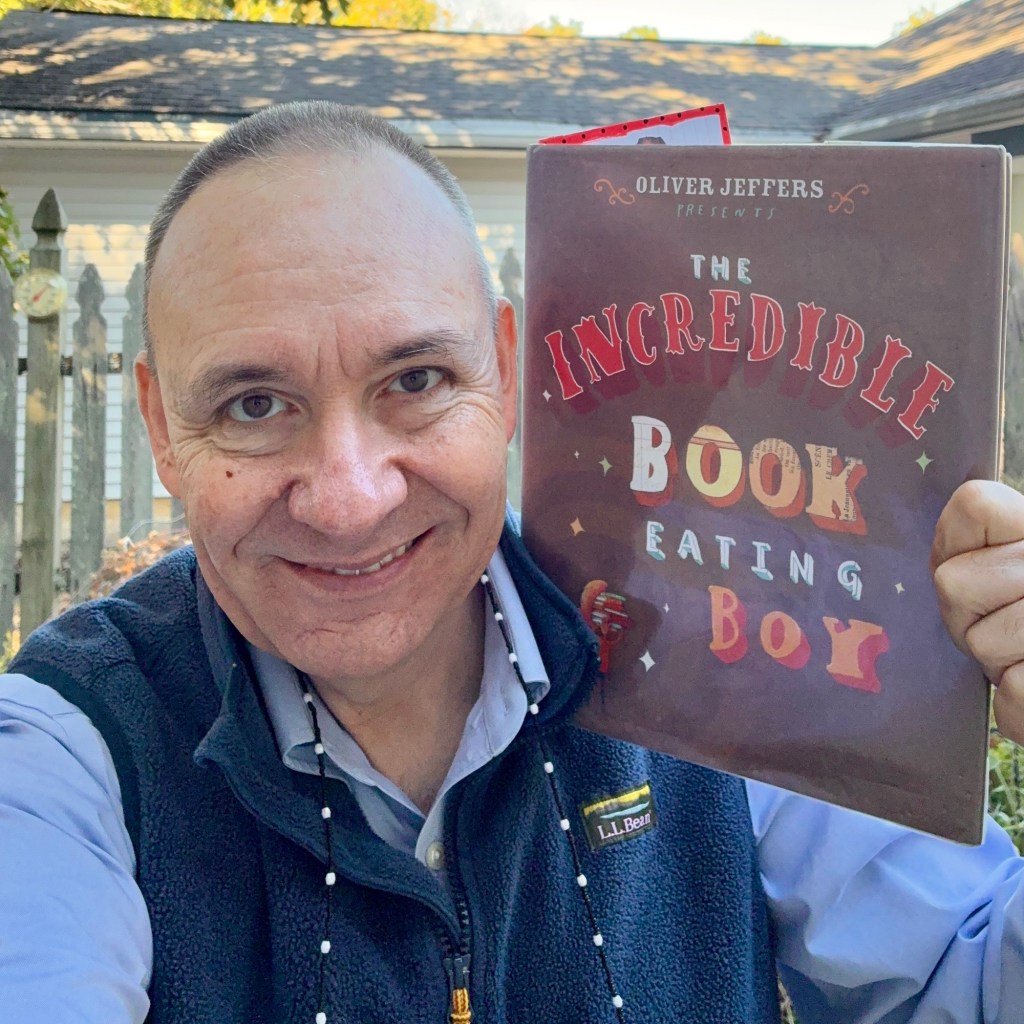
Today’s reading is a comic fable about appetite. Henry discovers that books are delicious, and soon he is swallowing them whole, growing smarter with every bite, until his hunger outruns him. He feels sick, and all that knowledge comes out jumbled. Only when he stops eating does Henry pick up a book and find out what reading can do. Oliver Jeffers paints Henry onto real old paper: book pages, ledgers, maps, even the margins of a 1918 Finance Act, so the whole world of the story looks like something Henry might have taken a bite out of.

I shaped this episode around an “Appetite” arc: the boy who wants everything at once, the moment that hunger turns against him, and the quieter joy he finds when he slows down. It seemed a good story for anyone, child or grown-up, who has ever tried to read too much too fast.

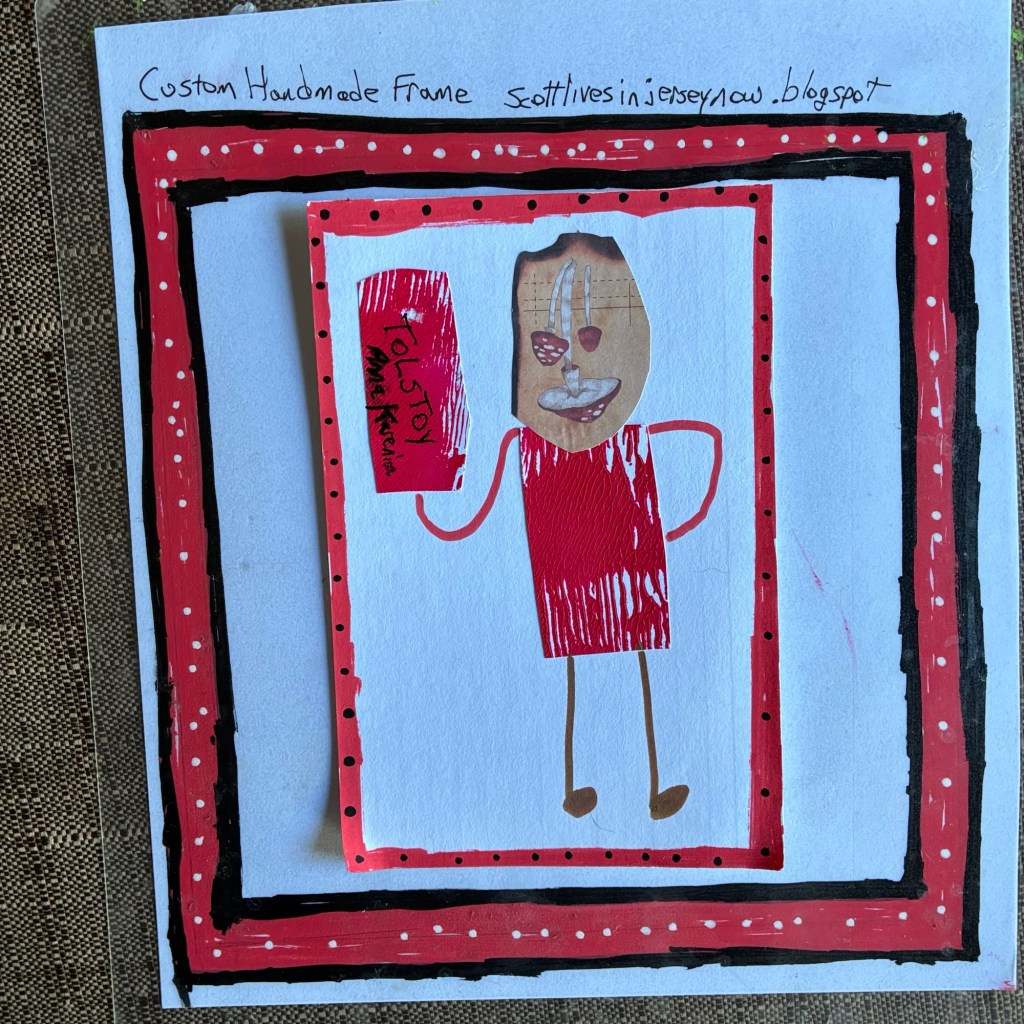
Before recording, I chose the “loved BOOKS” page for my index card. In the book, Henry stands in his red striped sweater, one hand on his hip, holding a red book up for inspection like a dish he is about to enjoy. My version gives him a red gelli-printed body and a face cut from paper printed with toadstools, so the mushrooms became his eyes and mouth. In his raised hand I put a red copy of Tolstoy’s Anna Karenina, which I thought Henry might find especially filling. He stands inside a red border with black dots, in my handmade red-and-black frame.

Watch the full episode, and then pick up a book and enjoy it slowly, one page at a time.

Read Along With Scott: A Child of Books

Tags

, , , , , ,

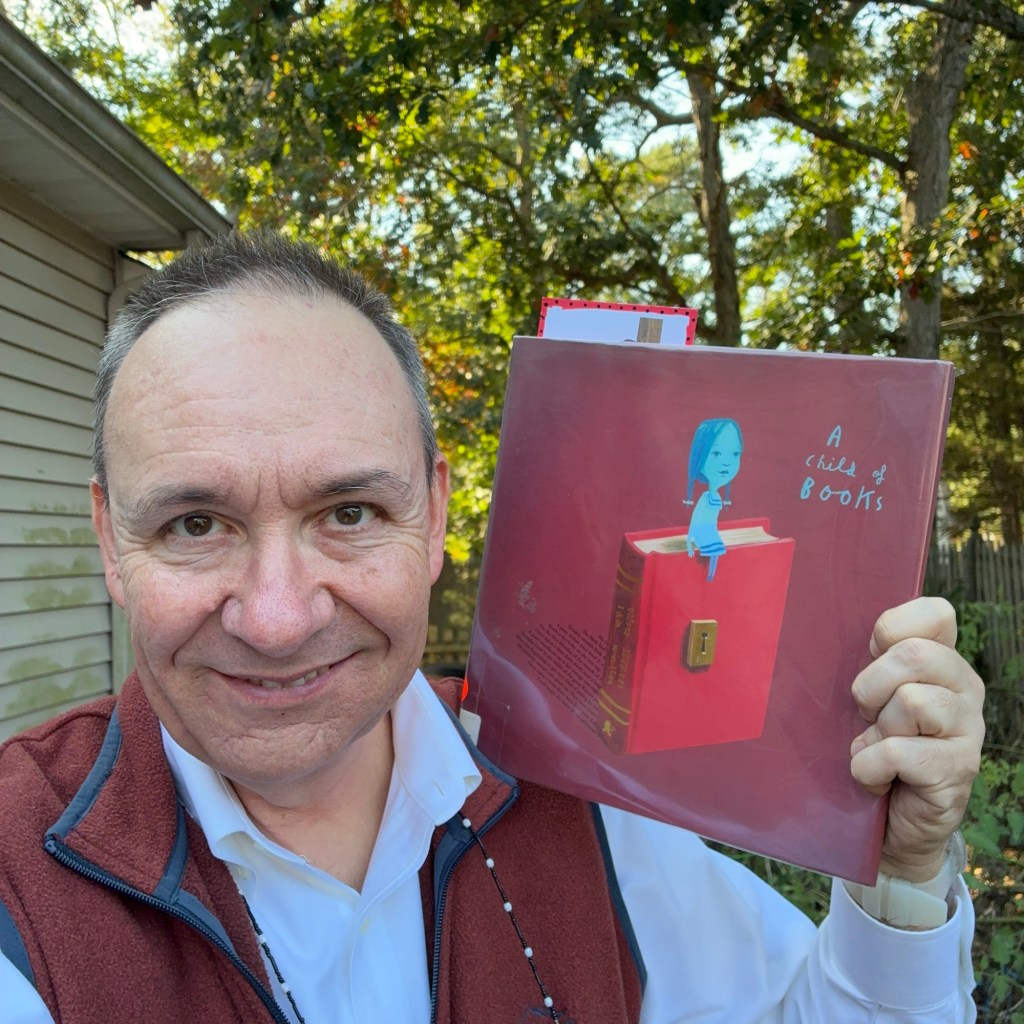
Today’s reading is a love letter to reading itself. In A Child of Books, a girl who comes from a world of stories floats across a sea of words, finds a boy who has never known that world, and invites him in. Oliver Jeffers draws the children with his light, wandering pen line, and Sam Winston, a typographic artist, builds the world around them from the actual words of classic books. The children climb mountains made from Peter Pan and play hide-and-seek in a forest whose branches are made from fairy tales. As the journey goes on, the black-and-white drawings gradually fill with color, until the final spreads are rich and full, as if reading itself were bringing the boy to life.

I shaped this episode around an “Invitation” arc: the girl who already loves stories, the boy who does not yet know them, and the moment one reader opens the door for another. That is, after all, what a read-aloud is.

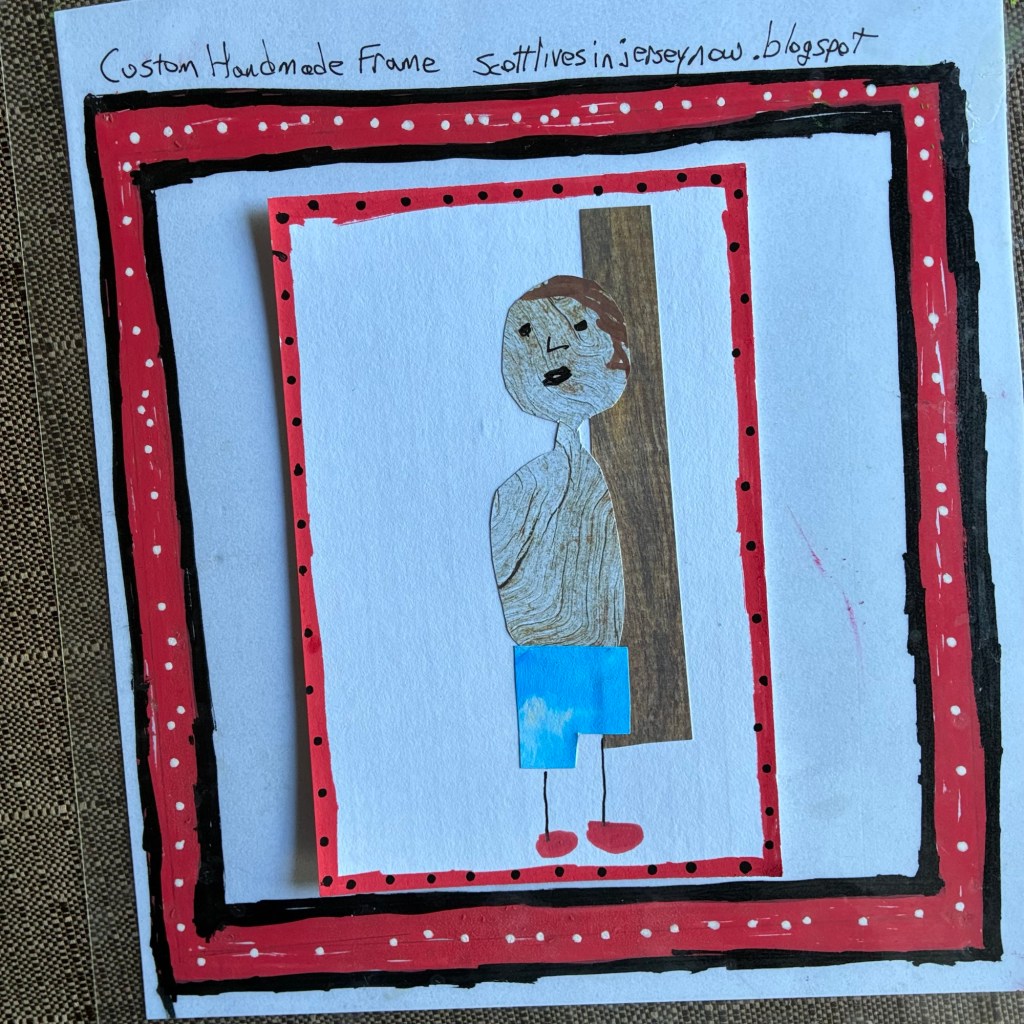
Before recording, I chose the hide-and-seek page for my index card. In the book, the boy peeks around a tree trunk made from the edge of an old book, with fairy-tale sentences spreading overhead like branches. My version has the boy cut from wood-grain paper, as though he is half made of the forest himself, with brown hair, blue shorts, and red shoes, standing beside a dark wooden trunk. He sits inside a red border with black dots, in my handmade red-and-black frame.

Watch the full episode, and then pick up a book and invite someone in.

Read Along With Scott: Making Art

Tags

, , , , ,

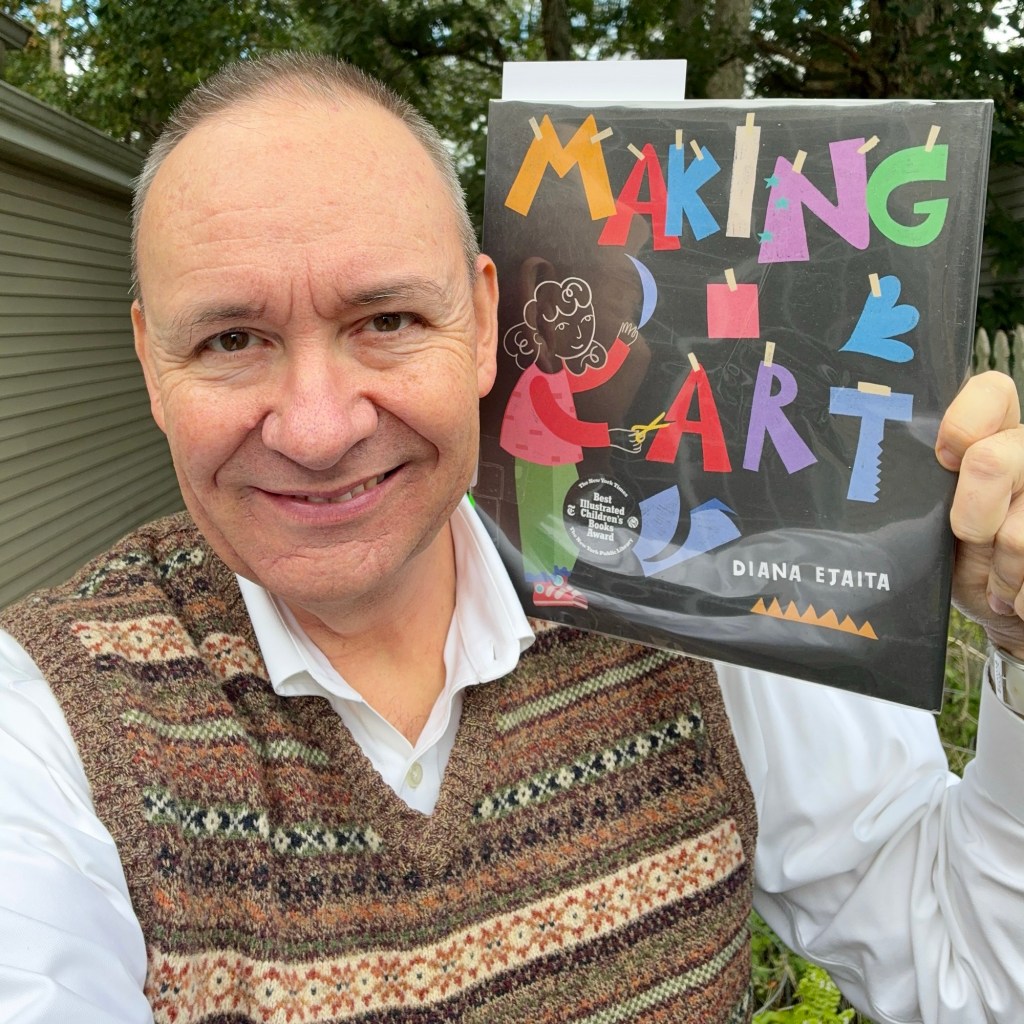
Today’s reading is a celebration of making. In Making Art, Diana Ejaita shows children building with blocks, drawing with chalk, playing homemade instruments, dancing, and shaping clay. Her message is simple and generous: everyone can make art, anywhere, with whatever they have. What I admire most is that she does not pretend it is always easy. Finding an idea takes time, bringing it to life takes patience, and art can hold sadness and worry as well as happiness.

I shaped this episode around a “Make and Share” arc, following the children from noticing and gathering ideas, through the work of making, to the moment of giving their art to others. My favorite page says it best: “By sharing your art, you share yourself!”

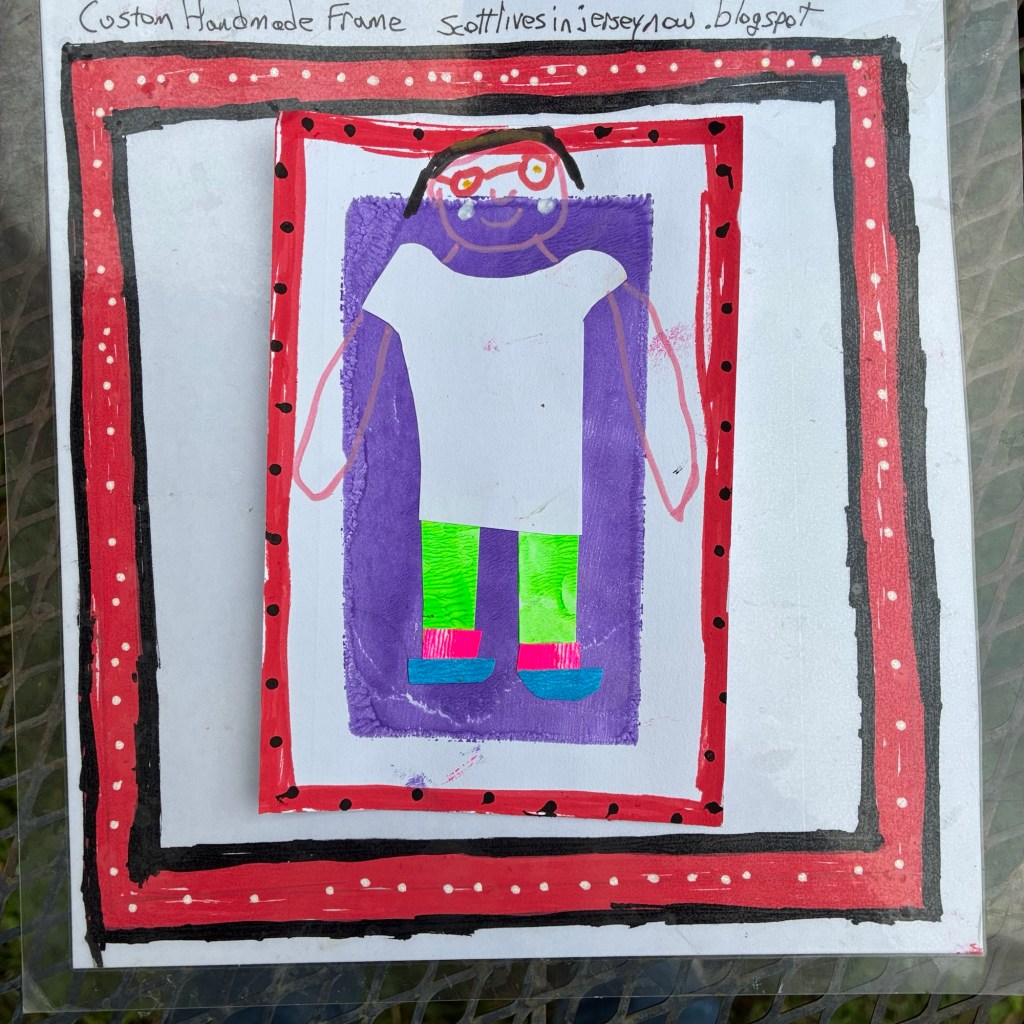
Before recording, I decided to answer that page directly. I made an index-card portrait of the girl in round red glasses who appears on it. I pulled a purple gelli print for the background, cut her dress from plain white paper, and gave her bright green leggings, pink socks, and blue shoes, with her face and arms drawn in pink and red. She stands inside a red border with black dots, in my handmade red-and-black frame. Ejaita works as a textile designer as well as an illustrator, and her flat, bold shapes felt like a natural match for cut paper.

Watch the full episode, and then find a scrap of paper and make something of your own.

Read Along With Scott: This Moose Belongs to Me

Tags

, , , ,

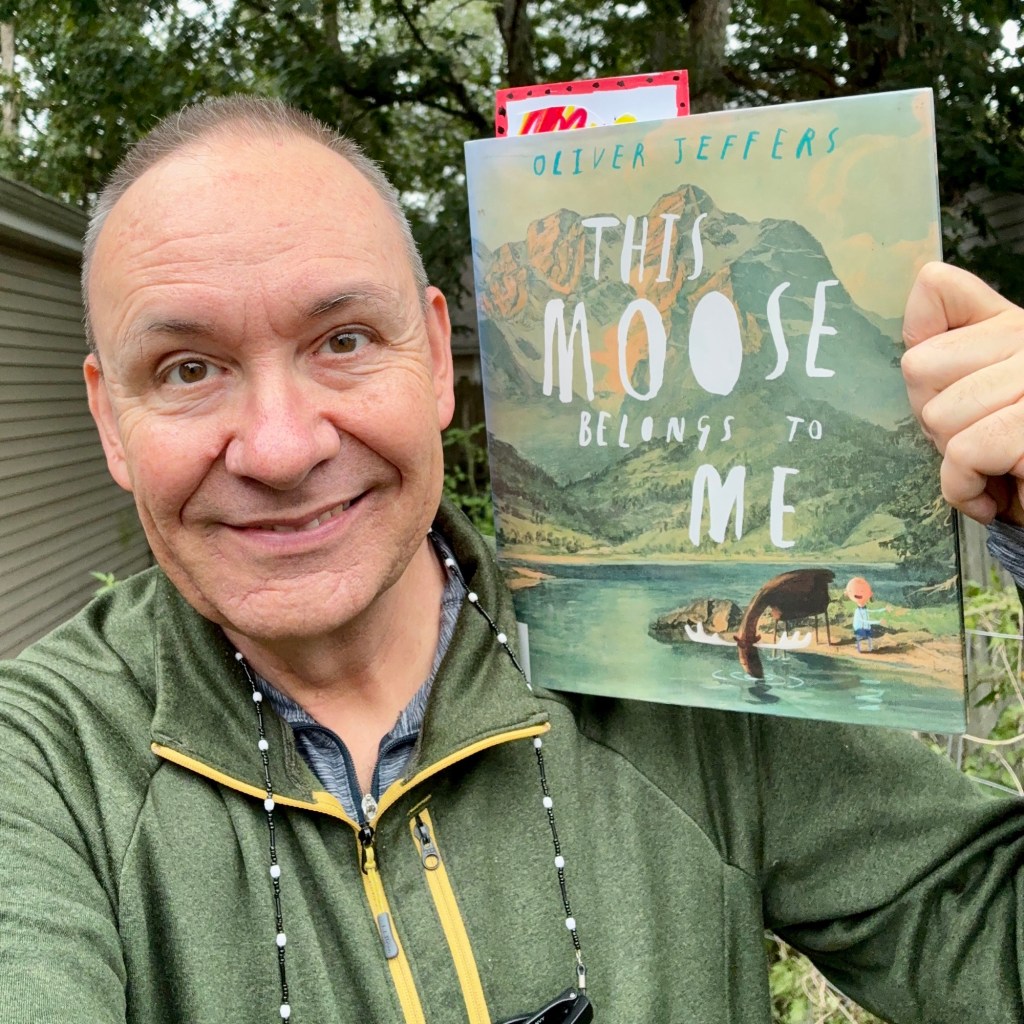
Today’s reading takes us into the mountains with Wilfred and the moose he is certain belongs to him. Wilfred calls him Marcel, gives him rules to follow, and expects him to behave like a proper pet. The moose, however, keeps wandering off, and one day Wilfred discovers that someone else knows this moose by a completely different name. If the moose answers to other people too, can he really be Wilfred’s?

I shaped this episode around a “Mine or Friend?” arc, following Wilfred from confident ownership to the harder question of what it means for someone to belong with you rather than to you. It is a story about letting go of a little control, and about how a friendship can survive when both sides give way a bit. One of my favorite small jokes is the price tag still dangling from the moose’s antler, as if he came from a shop, when of course he came from nowhere but the wild.

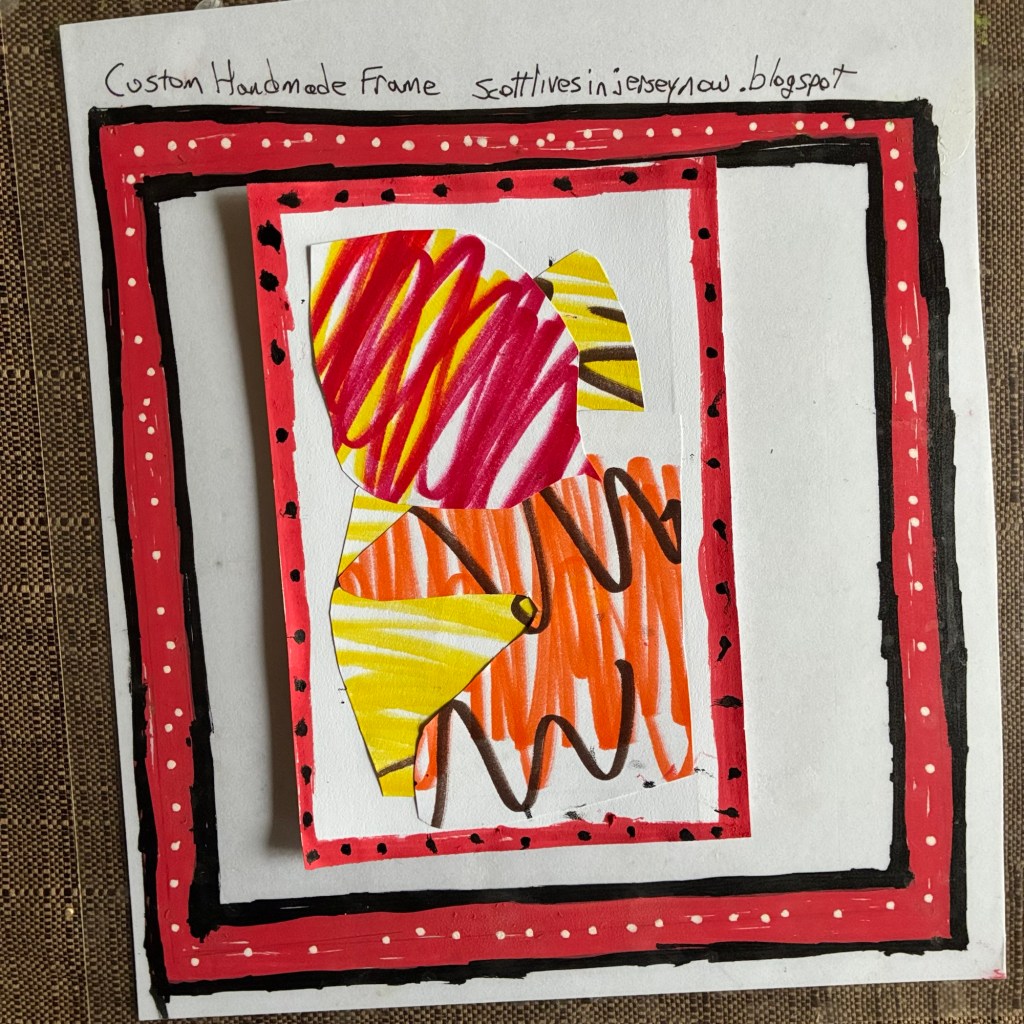
Before recording, I made a small index-card collage in autumn colors: torn shapes of crimson, orange, and yellow scribbles, crossed by dark wavy lines, set inside a dotted red border in my handmade red-and-black frame. I wanted it to echo the blazing fall trees in Jeffers’s landscapes, the kind of country a moose might wander through without asking anyone’s permission. A few fallen leaves on my table, a sassafras and a dogwood among them, kept me company while I worked.

Watch the full episode and find out whether Wilfred and his moose can find a way to share the mountain.

Read Along With Scott: Larf

Tags

, , , , ,

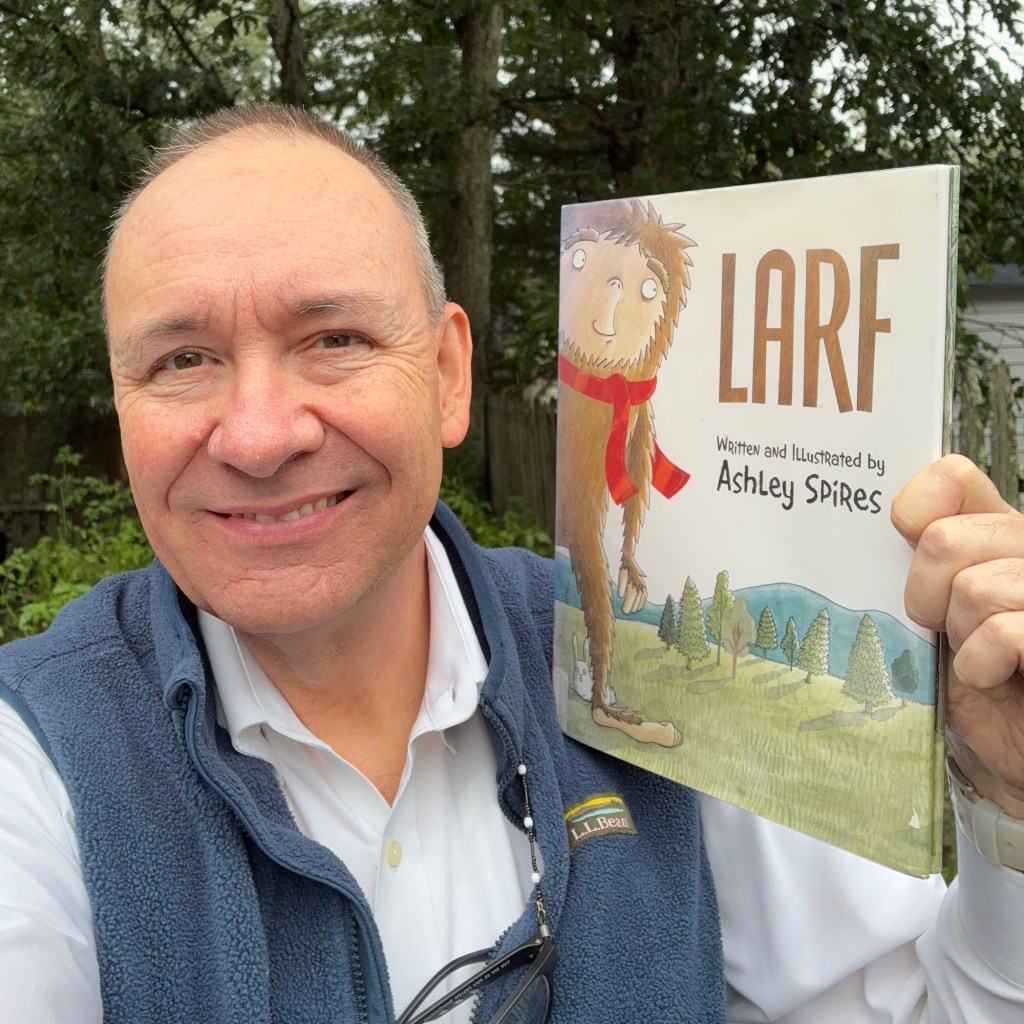
Today’s reading takes us deep into the woods to meet Larf, the hero of Ashley Spires’s picture book of the same name. Larf is a sasquatch who lives a peaceful, private life. He keeps to himself, stays out of sight, and believes he is the only sasquatch anywhere. Then he opens the newspaper and learns that another sasquatch will be appearing in the city. Is it true? And if it is, does Larf really want to know?

I shaped this episode around an “Alone or Lonely?” arc, following Larf from contented solitude to the unsettling question of whether he has been missing something all along. It is a story about the difference between enjoying your own company and wishing someone understood you, and about the courage it takes to step out of hiding, even with a disguise on.

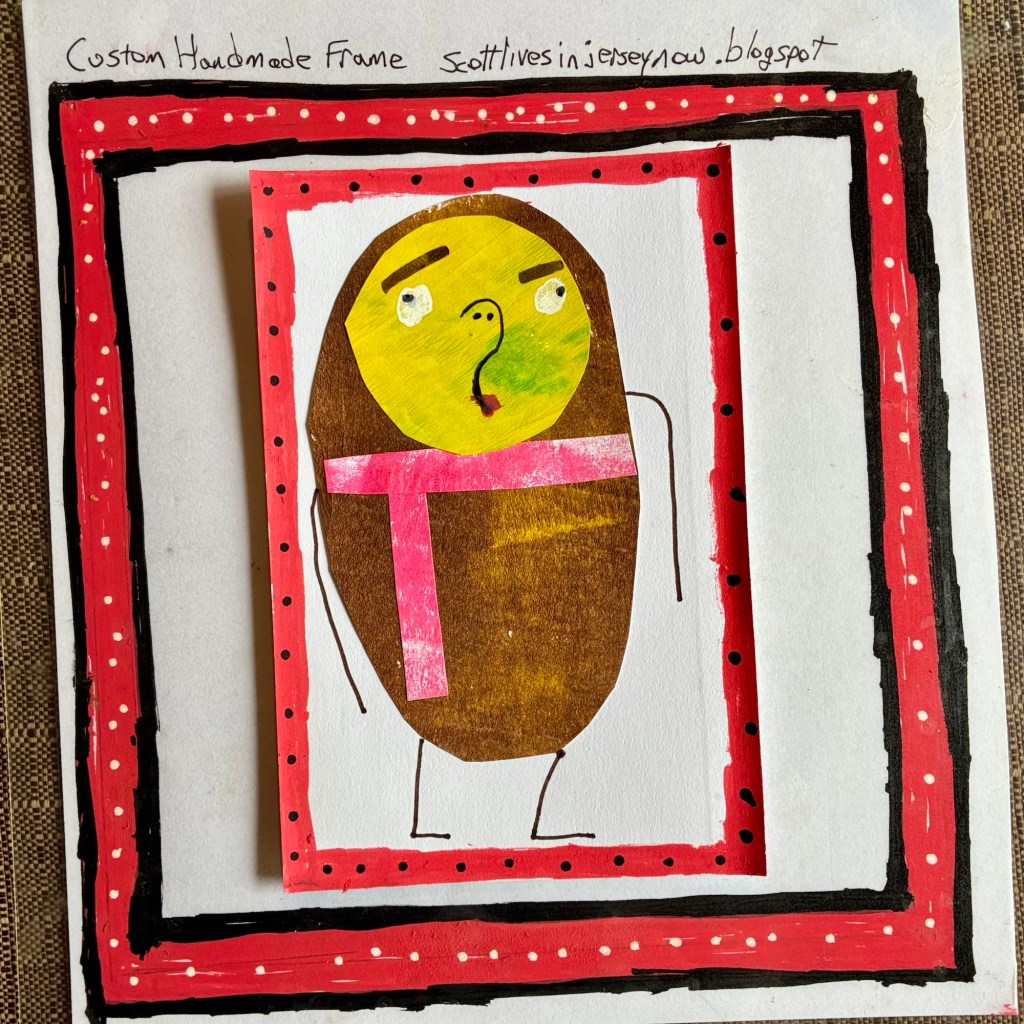
Before recording, I made a small index-card collage inspired by Larf: a round brown body, a yellow-green face with wide eyes glancing sideways, heavy brown eyebrows, a tiny surprised mouth, and a bright pink scarf, set inside a dotted red border in my handmade red-and-black frame. I wanted to capture that wonderful moment in the book when Larf stands frozen with the newspaper in his hand, scratching his head, his mug of coffee forgotten on the stump beside him.

Watch the full episode and find out whether one very shy sasquatch is truly as alone as he thinks.