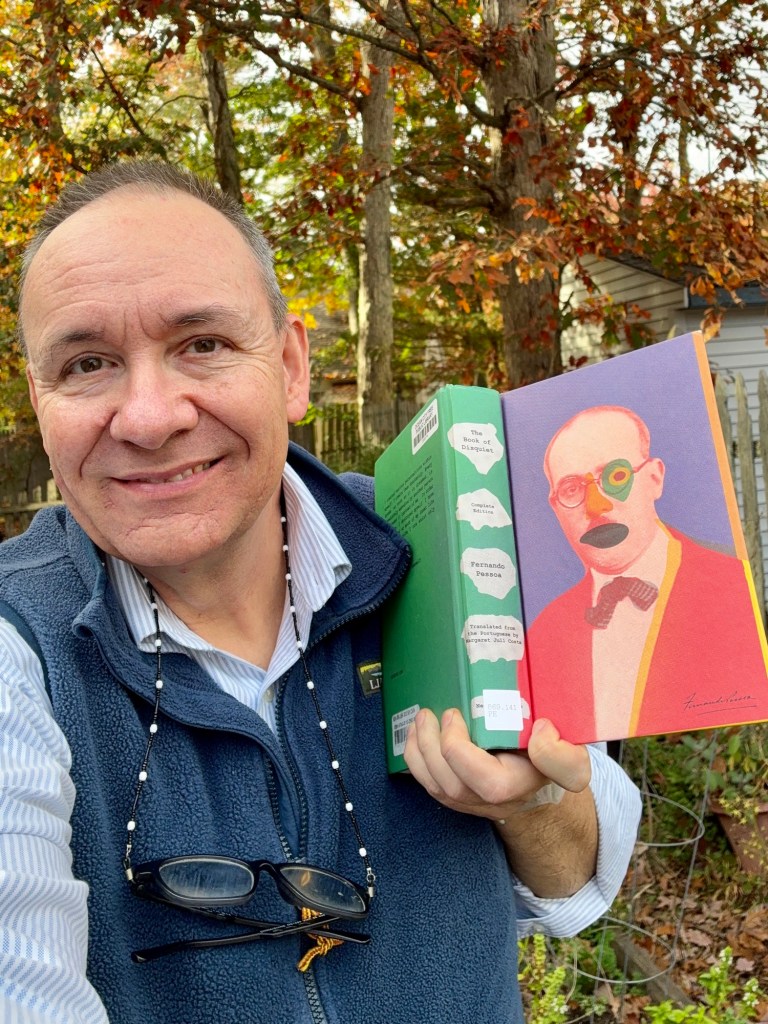
Last night I went to the Around the World Book Club at my local public library, and our destination was Portugal. 🇵🇹
My writer was Fernando Pessoa. His name is a small joke of fate: in Portuguese, pessoa means “person.” Yet he spent his life being not one person, but many.
He grew up in South Africa reading Shakespeare and Milton, then returned to Lisbon at seventeen and almost never left. He wrote business letters for trading companies and sat in the same cafés. In his lifetime, almost no one thought of him as a great writer.
After he died in 1935, his family found a trunk holding more than 25,000 pieces of paper, including work by invented poets he called “heteronyms,” each with a biography, a style, and opinions about the others.
The Book of Disquiet belongs to one of them, Bernardo Soares, a lonely assistant bookkeeper in Lisbon who watches the rain, his boss, and above all his own mind. The book is unfinished, hundreds of fragments with no plot. My advice: open it anywhere, read a page or two, and close it, as you would a diary.
One line stays with me: “Perfection never reveals itself. The saint weeps, and is human.”
Pessoa’s last written words were in English: “I know not what tomorrow will bring.” He could never have guessed that a trunk would make him one of the great writers of the twentieth century.

