
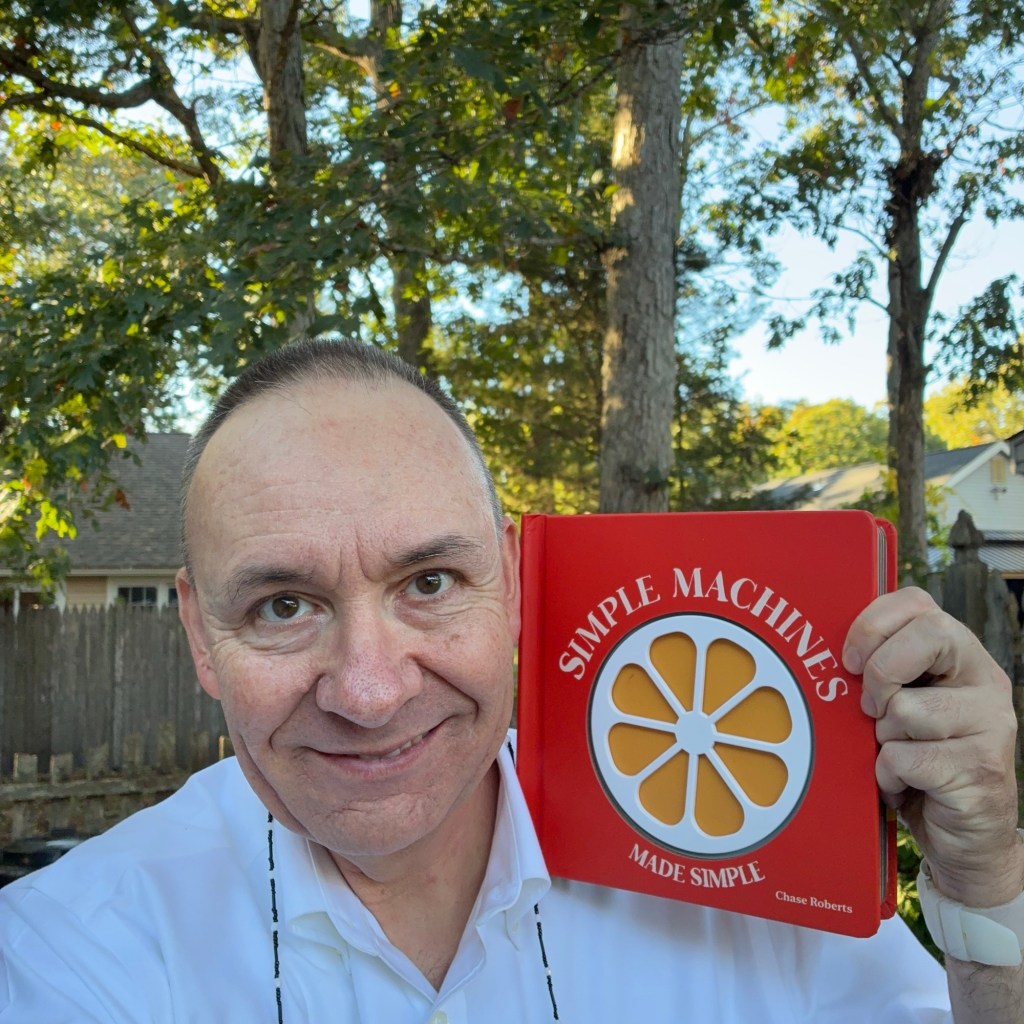
Today’s reading is a book you can hold in your hands and also work with your hands. Simple Machines Made Simple by Chase Roberts is a board book for very young readers, but it is not a typical picture book. Each page holds a working model: a wheel to spin, a knob to slide up an inclined plane, a wedge to push into a block until it splits, a lever to try. Alongside each one, Roberts points to the same machine in daily life, in scooters and roller skates, pizza slicers and escalators, shovels, knives, and axes.
Chase Roberts is a computer engineer, and his earlier books, Computer Engineering for Babies and its sequel, used buttons and lights to teach logic gates to toddlers. The idea for this one came, he says, when he caught one of his children catapulting cereal off a spoon at breakfast. I love that. Every engineer, it seems, begins as a child at a kitchen table discovering that a spoon can be a lever.
I shaped this episode around an “Ease” arc: the hard task, the clever trick, and the small wonder of work made lighter. People figured out these tricks thousands of years ago, and we still use them every day without noticing. This book gives them names and invites us to notice.
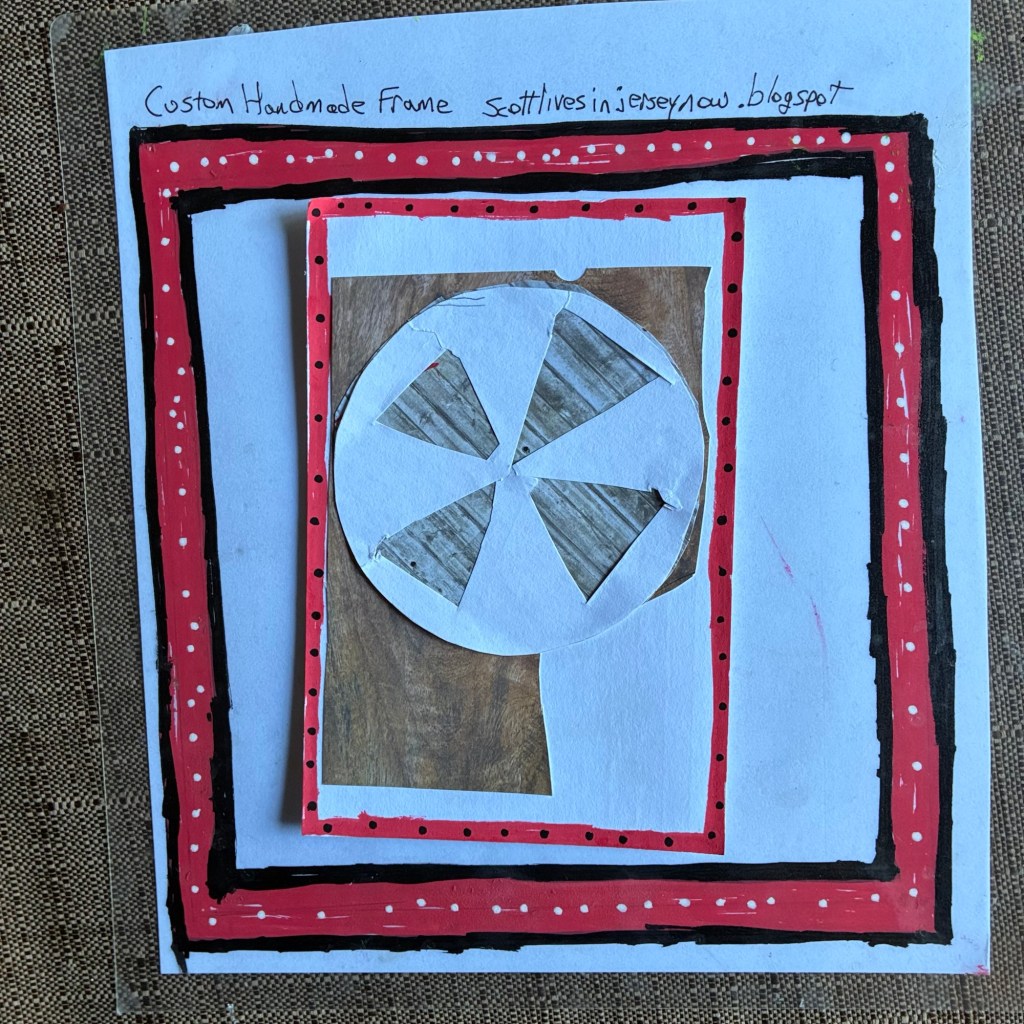
Before recording, I made my index card as a tribute to the wheel on the cover. I cut a white paper wheel and opened four triangular windows in it, so a weathered gray wood-grain paper shows through like spokes. The wheel sits on a block of brown wood-grain paper, mounted and ready to turn. It stands inside a red border with black dots, in my handmade red-and-black frame.
Watch the full episode, and then go on a simple-machine hunt in your own home. You may be surprised how many you find.

